
Secondary Losses
I doubt society realizes how many changes there are after the death of a loved one.
Which probably explains why most family and friends, not personally touched by significant loss, think the griever should be “better” in, oh, like a year. Which is ridiculous.
For those grieving the loss of a loved one, the reality is you are grieving not only the death (primary loss), but the “domino effect” or “ripple effect” of all the losses that occur as a result of the death (secondary losses).
After your loved one dies, the dominoes never seem to stop knocking into each other.
There are role changes and identity changes. The mother without her child to parent. The husband without his wife who was the social navigator. The brother without his sister to play with.
There are logistical changes. Moving houses or relocating. Navigating financial struggles. Deciding who now manages the grocery shopping or oil changes.
There are future considerations. Who will walk me down the aisle? Will my friend group be different? What do I do in retirement now?
The list goes on and on. No wonder grief is all-encompassing!
It’s easy to be hard on ourselves and wonder why we aren’t “better.” It can be helpful to remind ourselves ALL that we are actually doing in our grief. I like to use this blank graphic below to help grievers realize all that has been impacted and all they are actually doing. What secondary losses and changes have you been experiencing since the death of your person?
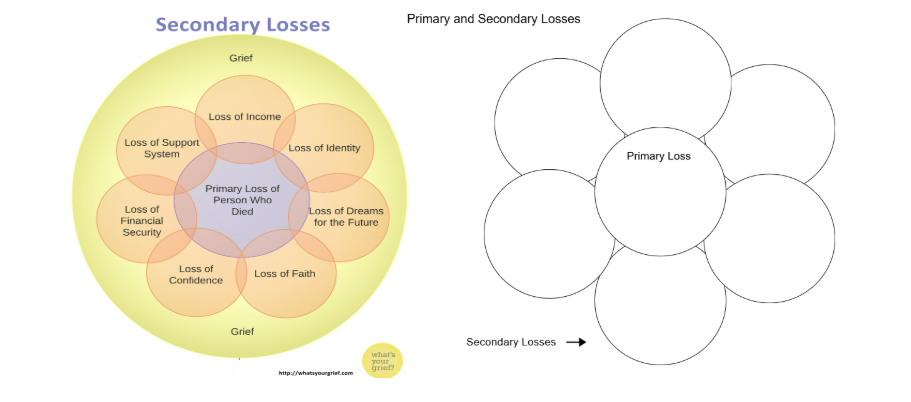
Left Image: What’s Your Grief
