
Grieving Styles
This would’ve been good to know that first year.
I’d attend grief support groups, primarily women in attendance. Most of them crying. Me not.
Then, without fail, at some point someone would (very nicely) say to me:
“Let it go.”
“Don’t hold back.”
“It’s okay to cry.”
“Keeping it bottled up isn’t good.”
While I’d walk out feeling connected with fellow grievers, I’d walk out feeling like there was something wrong with me. And how I was grieving.
Cue Ken Doka! And grieving styles.
Of the two primary grieving styles (instrumental and intuitive), I realized that I lean heavily toward instrumental—action-oriented, seeking solitude to reflect, being independent. Which, according to Doka, tends to be a more common coping style with men (…I did grow up with two older brothers, just saying!).
I also embrace elements of the intuitive style—openly expressing my feelings and being verbal (my husband would agree with that, just saying!).
In reality, most grievers have a blended style, where they instinctively incorporate elements from these two grieving styles.
The thing that stands out to me now is the dissonant style—grievers who feel a conflict in the way they experience their grief and the way they express it (often influenced by others).
It’s so cool to discuss with grievers the valuations and opinions regarding HOW they’re grieving. To discuss that dissonance. To explore and call out those societal pressures for the griever. All with the hope that the griever is freed to grieve authentically. For themself. As they feel is best. For themself.
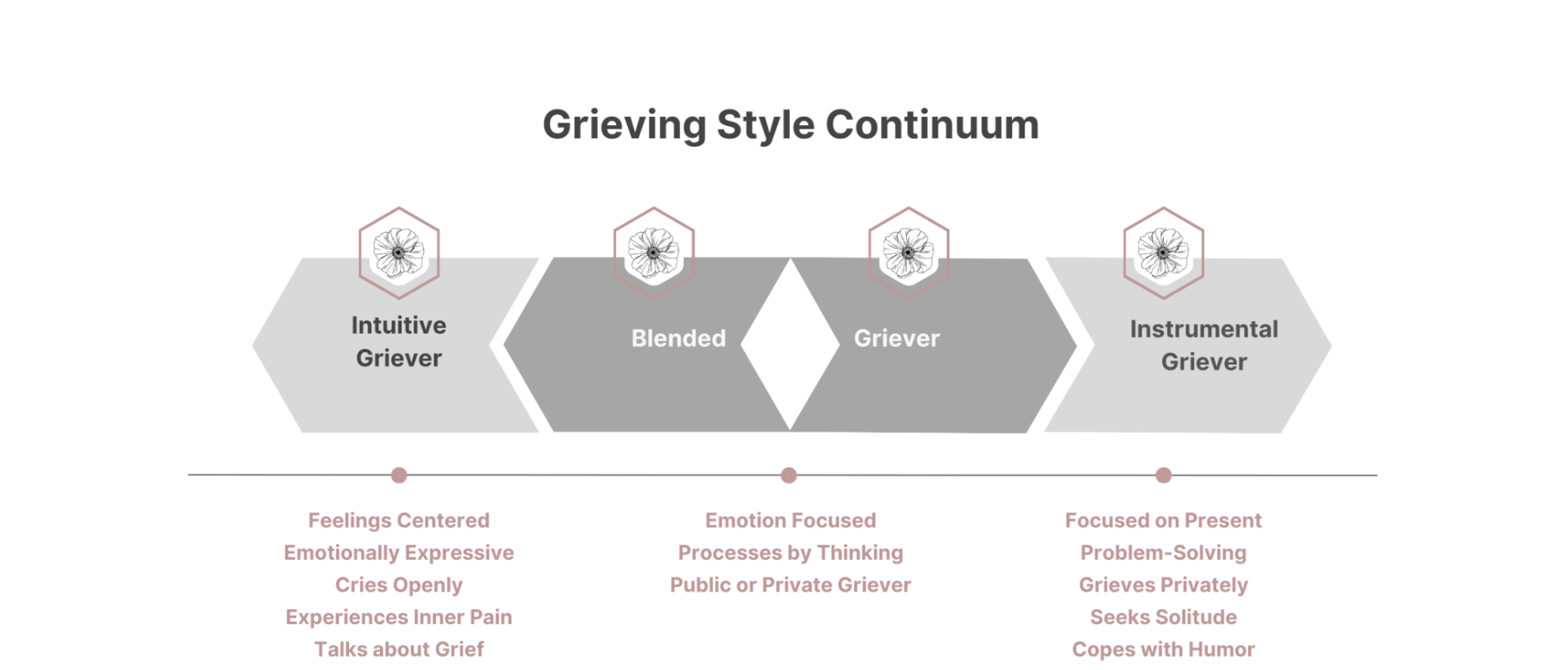
Image: Project Poppyseed
Doka, K. J., & Martin, T. L. (2010). Grieving beyond gender: Understanding the ways men and women mourn, Rev. ed. Routledge/Taylor & Francis Group.
